Showing posts with label Bushwick. Show all posts

Thursday, July 16, 2015

The Case for Graffiti Murals

As I noted in my last post, I visited Bilbao last month to take part in a conference about the creative industries. It was an phenomenal experience, but the hardest part was trying to distill the crux of my book, which goes on sale on August 28, into 5 to 7 minute presentation.

What really went over best was when I dropped in a slide that connected New York to the local neighborhood of Zorrotzaurre, which only worked because I got there a day early and was able to run to the area and take pictures. You'll also note that it's tailored for the conference, and when I deliver it again, I'll make lots of changes to reflect a new audience.

Anyway, hope y'all like it. Enjoy!

New York City Graffiti Murals

In 1975, New York City was the kind of place where the city’s police and fire unions created this “survival guide.”
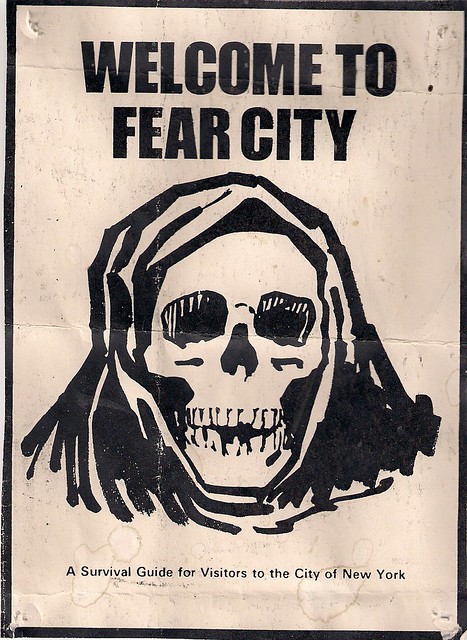
Fear City


They were trying to prevent layoffs at the time, and one of their strategies was to promote the fear that the city was completely out of control. Unsurprisingly, the reaction to it was so negative, it was never actually distributed, but it tells you a lot about the way things were back then.

Fast forward 40 years, and you’ll find a very different New York City from that one. The crime that was rampant back then has receded, and real estate prices have sky-rocketed. A penthouse in the One57 tower on Central Park, for instance, sold for $100 million in January.
05-003

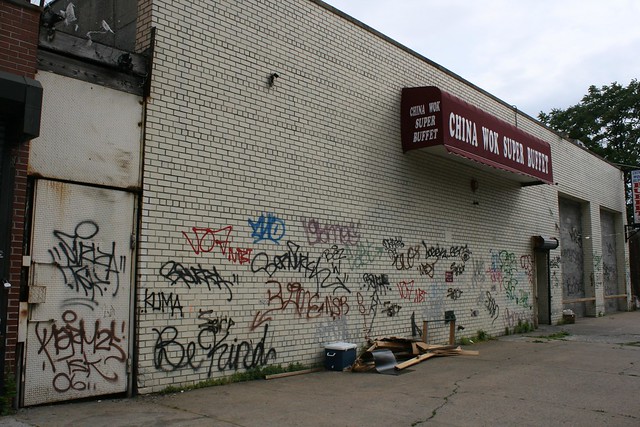
Graffiti, which also first appeared in the 1970’s, is still present though. It’s no longer the scourge of the subways that it once was, but it is still present, particularly outside of Manhattan. Mind you, it’s very much illegal, and the punishments are quite harsh: A felony charge awaits adults caught doing it, and stores are actually prohibited from displaying real cans of spray paint in their window, lest they tempt teenagers to steal them. Unlike in some European cities, there are no areas of the city where it is legal to do graffiti, so if you want to do it without breaking the law, you have to partner with a building owner.

But despite graffiti’s association with crime, it is very much a part of the cultural fabric of New York City, and in the right context, it can empower local communities and enliven streetscapes that are simply being scrubbed blank today.

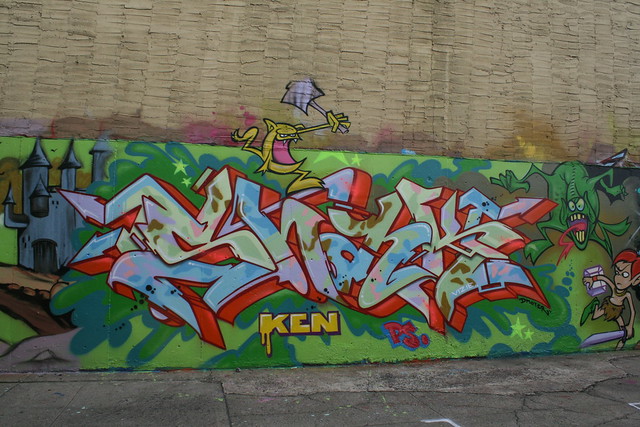
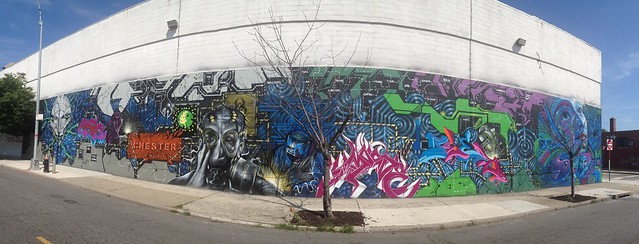
I’m talking about this sort of thing:
17-005

This is a mural in the central Brooklyn neighborhood of Gowanus that was done with the building owners’ permission. For my thesis, I visited six locations around the New York City metropolitan area to learn how these kinds of murals are created, and the effects they have on the area. Today I’m going to focus on one of those locations, Hunts’ Point in the Bronx.
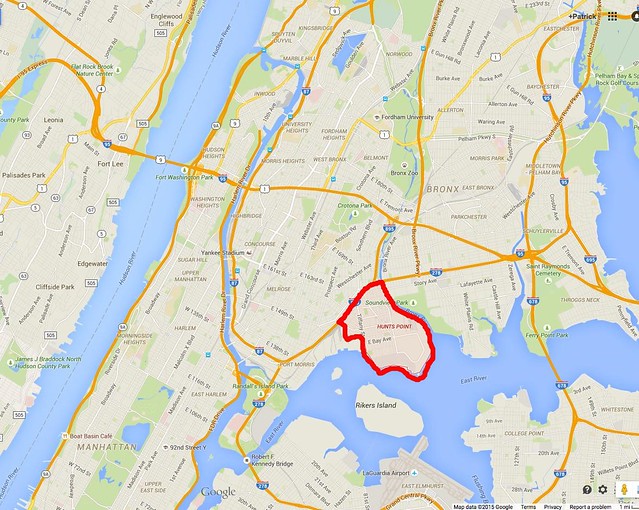
Hunts Point
The Bronx is the poorest of the five boroughs, or counties, in New York City, and Hunt’s Point is one of the poorest parts of the borough. But it’s also the site of amazing graffiti, thanks to the TATS Cru, a group of graffiti artists who have created a business out of graffiti. In Hunts Point, they do murals like this:
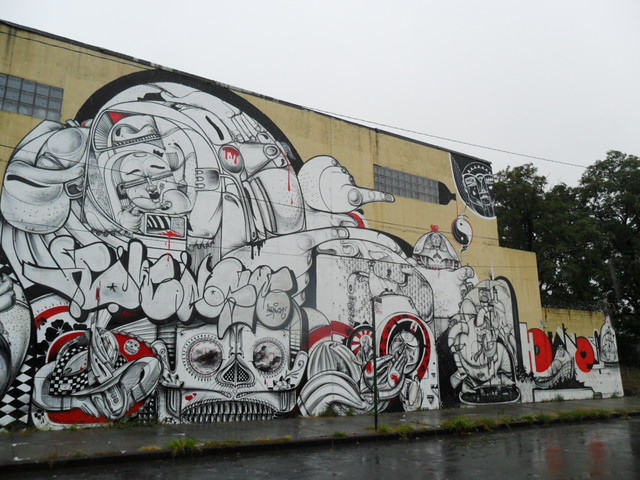
SAM_0315 And this
IMG_3015
The TATS Cru’s work in the Bronx is relevant to a conference about Cultural and Creative Industries, because the group members are from the area, and rather than displace the poor, they use the tools of an art form that was invented on the streets, and is extremely democratic. One need only secure a wall and spray paint to bring color to the masses. And that’s what Hector Rodriguez, one of the founders of the TATs Cru, told me when I interviewed him. I quote:

“Not everyone in New York City really has the time to partake in the art culture that’s out there. The stuff that we’re putting out there in these neighborhoods, is the modern day Picassos, Goyas and Monets that bring art and color to other people’s lives. They don’t have any other color in their life, outside of what we’re painting out there.”

Just up the road from Hunt’s Point is another mural that the TATS Cru did that I’d like to share with you.
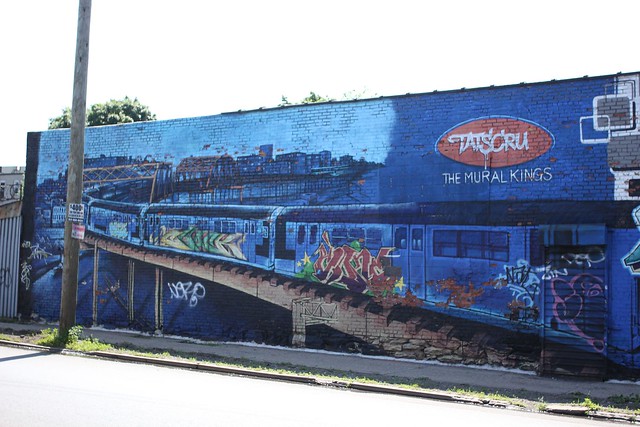
10-006
There are murals like this all over New York City, and they serve a very important function: They preserve local culture and tell residents that their community has value beyond mere real estate values. They are, in the words of Marxist scholar David Harvey, “Marks of Distinction,” which he says represent and I quote, “the collective symbolic capital that a city has accumulated through authenticity, uniqueness, and particular non-replicable qualities.”

Graffiti is a global art form today, but it was born on the streets of New York in the 1960’s and 70’s. It distinguishes New York from other places more than the One57 residential tower that I mentioned earlier, which are simply cogs in the transfer of capital from one global city to another.

I’ll take this over towers like that any day.
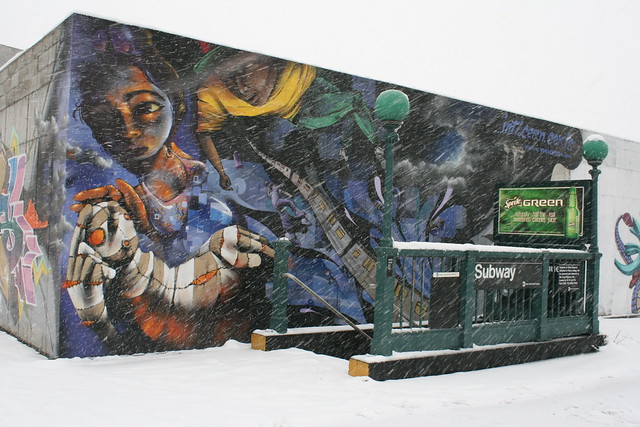
IMG_1769
Because many New Yorkers still associate graffiti with life in 1975, when 1,645 people were murdered there, it’s easy to understand why city government is hesitant to partner with graffiti artists. For comparison, there were a record low 328 murders last year.

It’s an example of “symbolic interactionism” a theory which states that people interact with each other by interpreting or defining each other’s actions instead of merely reacting to each other's actions. They don’t hate graffiti because of what it is. They hate it because of what it represents, which is a loss of control over space.

New York City currently reclaims that space for building owners for free, by erasing, or “buffing” graffiti, under a program over seen by the Economic Development Corporation. This helps owners regain control of their space, but I would argue that because the city government does not also promote partnerships building owners with artists who might want to create graffiti murals, it is missing out on an opportunity to promote a homegrown creative industry.
17-001
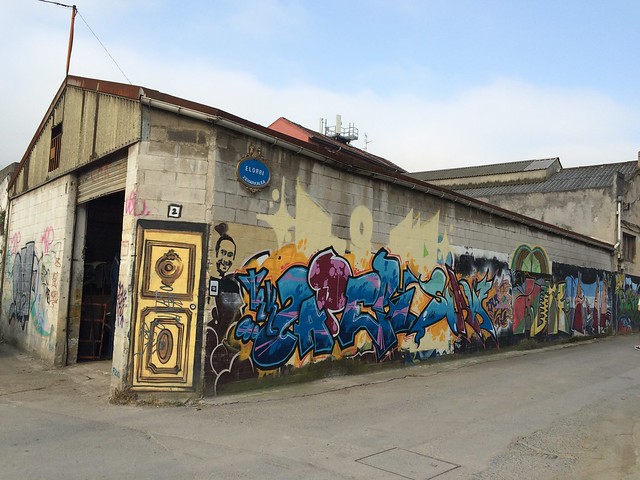
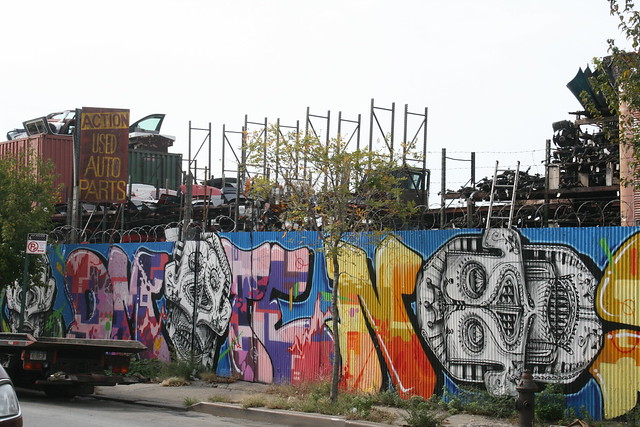
Although graffiti murals are primarily found in gentrifying neighborhoods that are popular with artists, such as Bushwick in northern Brooklyn, they can also be found in “uncool” areas like Staten Island, Trenton, New Jersey, and Hunt’s Point. And industrial neighborhoods have always been ripe for murals; I couldn’t help but be amazed at the amount of art in Zorrozaurre. IMG_4274 Regardless of where they are, they have the power to make a junkyard in Hunts Point into an art gallery.
IMG_3018
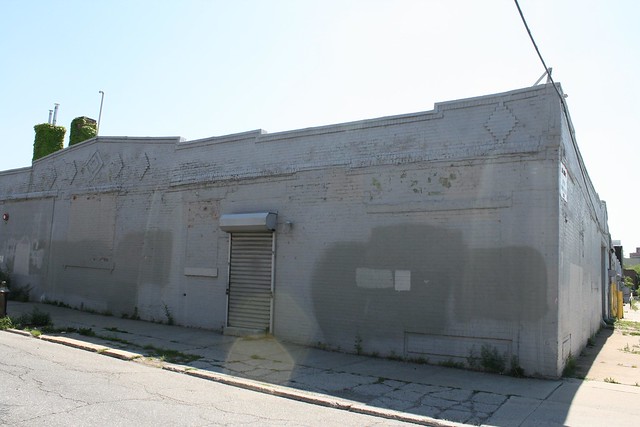
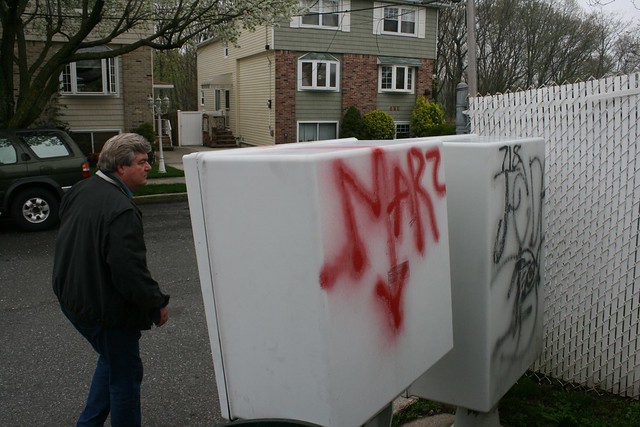
In some cases, building owners hope that murals will help spur gentrification, but many simply desire a space that’s more aesthetically pleasing than graffiti tags. And while most would agree that a wall that’s been buffed clean is better than a wall that looks like this:
IMG_4136
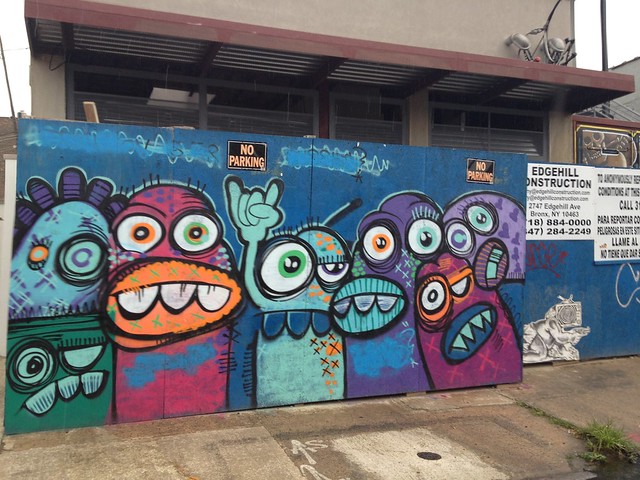
My task has been to show how graffiti murals are better than both. The partnerships that currently exist between owners and artists who create murals are significantly better both for them and members of the community, who I also spoke to during my site visits. In Brooklyn, a building owner compared murals to growing a garden in an alley, while a resident of Jersey City said to me, and I quote:

“Tagging is usually done out of vengeance. You know, you’re mad at someone, you’re mad at the person in the building and you just want to tag something, just to let them know that you was here, and you really don’t care if it’s painted over or if it’s clean, you know, when the bricks are clean. But when you do a mural like this, you’re really putting your heart into it. So it’s totally different.”
IMG_2001
Finally, there’s the issue of authenticity. In 1939, Walter Benjamin wrote, and I quote, “the uniqueness of the work of art is identical to its embedded-ness in the context of tradition. This tradition itself is thoroughly alive and extremely changeable. What was equally evident to both was its uniqueness, its aura.”

Graffiti murals are derived from the tags that first appeared on the streets and subways of New York. Their aura is on the street, and it’s partly because of this authenticity that people from around the world flock to see the graffiti and street art of New York.

In conclusion, I am optimistic that the people in New York are beginning to understand the value of graffiti murals. The six owners I spoke to for my thesis are great examples of private property owners who prefer art over blank spaces, and there are two other groups that are leading the charge to beautify the city: The city’s department of transportation, and Groundswell, a non profit group.
Graffiti Mural Book Cover
If you’d like to learn more, my thesis is being published in August as a book; I’d be happy to share more info with you on how to buy a copy.

Thank you.

Thursday, May 15, 2014

Cowabunga!

Ai yai yai, I just realized it's been exactly two months since I last posted. Sorry about that, Politics of Global Economic Relations really took a lot out of me. Great class, and I learned a lot about foreign direct investment, trade investment, and exchange rates, but it was definitely a steep learning curve. I basically never spoke in class, and instead just tried as hard as I could to sop up all the information flowing around me. Ask me about the World Trade Organization, the GATT and the Bretton Woods Agreement sometime!

So now it's time to buckle down and transform the thesis into a book. This is basically going to take all the summer, so I'll be referring to it here a lot, but I imagine I'll leave a lot on the cutting floor, lest I share too much that will end up in the book. I do want some people to buy it, you know?

In the mean time, I've been trying to keep at least one ear on the current street art situation in New York, which like the rest of the city is always changing fast. I've paid visits to Welling Court (with my daughter Eliza in tow) and the Bushwick Collective recently, though it's been much harder to visit anywhere in the Bronx, upper Manhattan or New Jersey.  Comes with living in Brooklyn, I guess.


A few articles that have caught my eye, either from the folks at Brooklyn Street Art, Street Art NYC, Luna Park, or Graffiti New York:

The New Must-Have for Luxury Buildings: Graffiti
Solid reporting, and super depressing at the same time. I've seen 40 Bond up close, and I think I've even taken pictures of the spaghetti-like scrim that lines the front. And while I actually think it's kind of a neat accoutrement, I never once mistook it to be related to graffiti. Fortunately, no one seems to really take seriously the developers' assertion that it represents a "downtown-on-the-edge point of view," whatever the fuck that means. In my business, we call that a word salad with a heaping side of bullshit.

I'm on this guy Niklas Maak's side:

“What they pioneered as a form of protest is transmuted into a fortification that prevents them from spraying onto the actual façade,” he says. 

I also find it amusing that the  word “NO” written in dark-orange spray paint, is somehow seen as "edgy" for a development in DUMBO, the single most expensive neighborhood in Brooklyn. How, exactly, is this any different from leaving the remains of a antique advertisement for Ma Bells' Miracle Cream? You're looking at a remnant, you dolts, nothing more. Talk to me when you live the way the folks do at 190 Bowery.
190 Bowery, a/k/a the coolest house in Manhattan
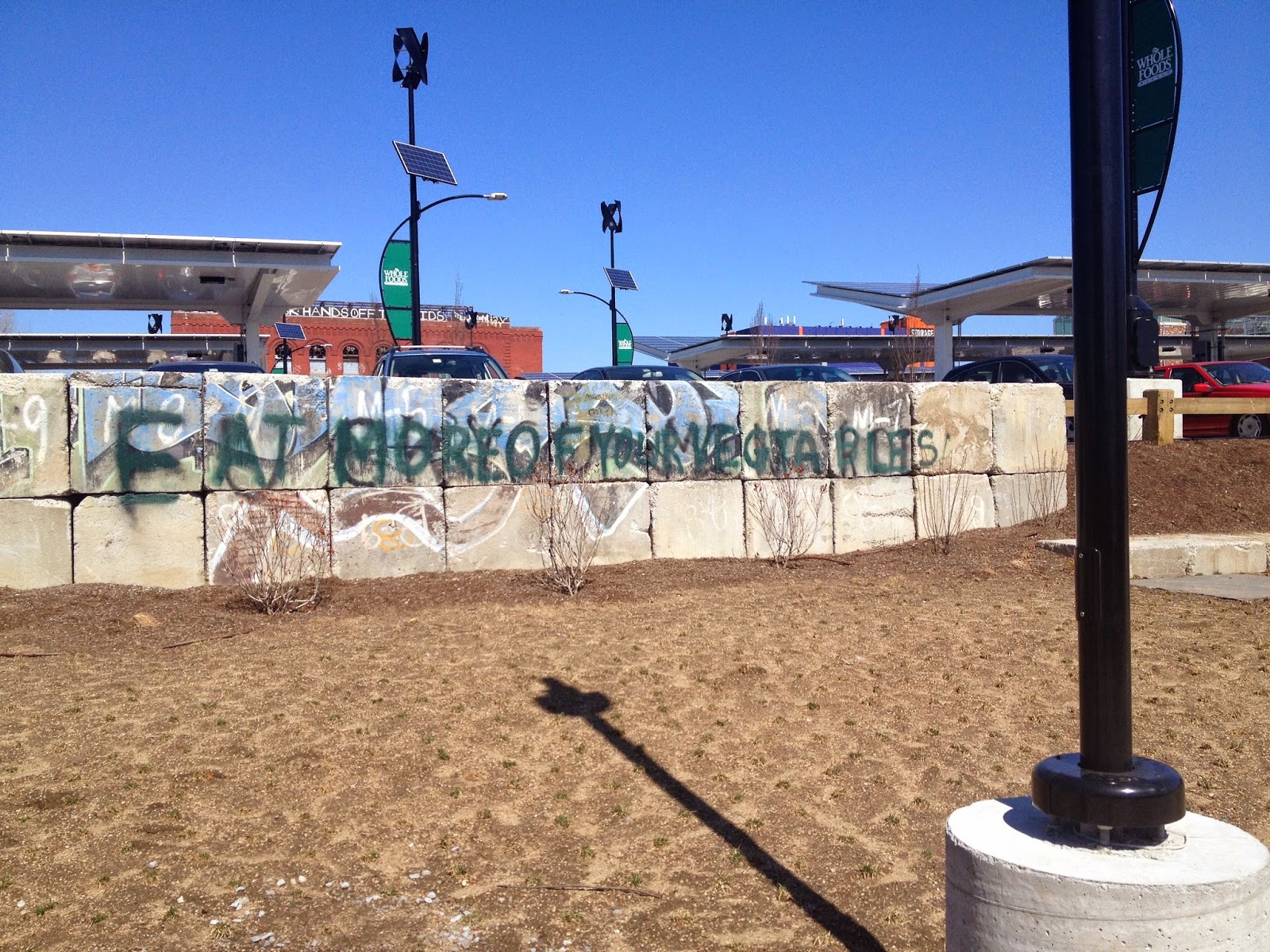
Final thought: I'd like to ask author Elizabeth Greenspan if she's ever left Manhattan. Because when I read "Meanwhile, the kind of graffiti for which New York is most famous—tags wallpapering subway cars and city walls—has largely disappeared," I laughed out loud. Yes, tags are gone from subways. But walls? Oh, honey, come on out to Brooklyn some time, and I'll show you OODLES of tags. You won't even have to go all the way to East New York, I promise!
That's right they even have graffiti at Whole Foods in Gowanus.
Eat more of your vegetables!
But don't take my word for it. Even new NYPD honcho Bill Bratton agrees! I'm not sure how I feel about his assertion that graffiti is growing in NYC and "as a city, we need to basically take it on because that’s the first sign of urban decay.”

On the one hand, he's parroting the same old "Broken Windows" theory that law enforcement refuses to let go of, in spite of the fact that the theory has been proven to be wrong. I mean, Greenpoint, Williamsburg and Bushwick are dripping with graffiti these days, but do you hear anyone worrying about how these three neighborhoods are spiraling into hellish crime zones? Anyone? Bueller?

Tags? What tags? That stuff's gone yo!
The optimist in me hopes that this means a guy like Bratton might be open to exploring new ideas for combating vandalism, including murals. I mean, it's already being done on a large scale at the Bushwick Collective, and on smaller scales like this mural in the Bronx. Hell, even Amtrak is getting into the art game! The pessimist sees a guy who made his name in the 90's stamping out "Quality of Life" crimes in NYC, and like so many others, he may view the problem as one of enforcement, and nothing more.
Robots Will Kill's latest addition to Bushwick. I can see it now:
"You know, we really like the face, but can you do it more, "sideways"?
Fingers crossed!


Friday, September 13, 2013

The Pitch


Hey, ya like this? When I was a kid, we used to say stuff like this was "ill". Do kids still say that sort of thing? I have no idea, but I think we should bring back the term, if for no other reason that we could maybe hear You Be Illin' on the radio again. Ah well, one can always dream...

Speaking of dreaming, the truly hard work has commenced as far as the thesis is concerned. It's done, but at the moment, it's still just a PDF sitting on the hard drives of myself, a few friends, family, and Fordham (who will eventually make it available here). What good is that though?

So I've begun poking around looking for someone to publish this thing. One of the first problems I ran into was that many journals have word count limits. Public Art Dialogue, which was suggested to me by the fellow who runs Vandalog, for instance, has an 8,000 word limit for submissions to theirs. When I did a word count on my opus, I came out with 41,186 words. Yowza!

Now, granted, this includes appendixes, the bibliography and a whole chapter on 5 Pointz that can easily be cut, as it's more or less bonus material. But still. How the HELL does one cut that down to 8,000 words? Forget cutting to the bone; that feels like I'd be cutting it down to a shadow.

Then there's the issue of who would want to publish such a thing? It's a scholarly piece of writing, but not in the strictest sense, as I've been told my tone is much more colloquial than what is expected for peer-reviewed journals. But also it's not really the kind of work you see in popular publishing either, as it's not a picture book. Well, it does have nearly 80 pictures, so that helps!

Since this is all so new to me, I've been reaching out to as many people as I can think of who might know someone who knows someone who might be willing to have a peek at my work. If I can whittle it down to a fifth of what it currently is, I will submit it to Public Art Dialogue. At the suggestion of Eric Felisbret at @149th St, I e-mailed four publishers; two never responded, and one said they really only do visual books. But another actually responded Wednesday (I'm not going to name them, lest I jinx myself) and asked me to submit, as part of a formal proposal:

-Table of Contents or outline
-A proposed introduction
-A few pages of text
-Six or so sample illustrations

Woo!

Oh wait, I feel the need for a break here.
Holla!
So yeah, it's very exciting. Also, predictably scary. I've been writing professionally for 15 years, but this is the first time I've put forth something this big. Given how many terrific books there are about graffiti and street art, it's easy to wonder where my work fits in the existing canon.

I've cut and pasted the Brooklyn chapter, the intro and a slightly pruned down table of contents into a proposal, and will throw in a few images from that case study, and tweak it all so it all seems to go together seemlessly. Then it's back to the old "What do you think of this?" query to a few trusted sources to see if it makes any sense.

Then, who knows? Maybe a book? Stay tuned.

Oh, and for what it's worth, the preceding images are courtesy of the Bushwick Collective and nearby surroundings. Do check them out. It's jaw droppingly good out there.

P.S. If you'd actually like to read the thesis, drop me a line at pverel(at)yahoo.com. I'd be happy to send you a copy.

Tuesday, January 8, 2013

Happy New Year!

Hey, how it's going? Is lucky 13 treating you well? Does it feel like it was just days ago that you were furiously, frantically, desperately trying to piece together out the final shards of an unwieldy opus, all while simultaneously working full time, shopping for the perfect presents for your family and trying to be what passes for social? No? Oh, that must be just be me.

And how about the guns? I can't be the only one who was so enraged by the mass shooting in Newtown as to be driven to distraction, unable to focus on much else. Am I right? I mean, who gives a shit about graffiti when people are DYING?!?

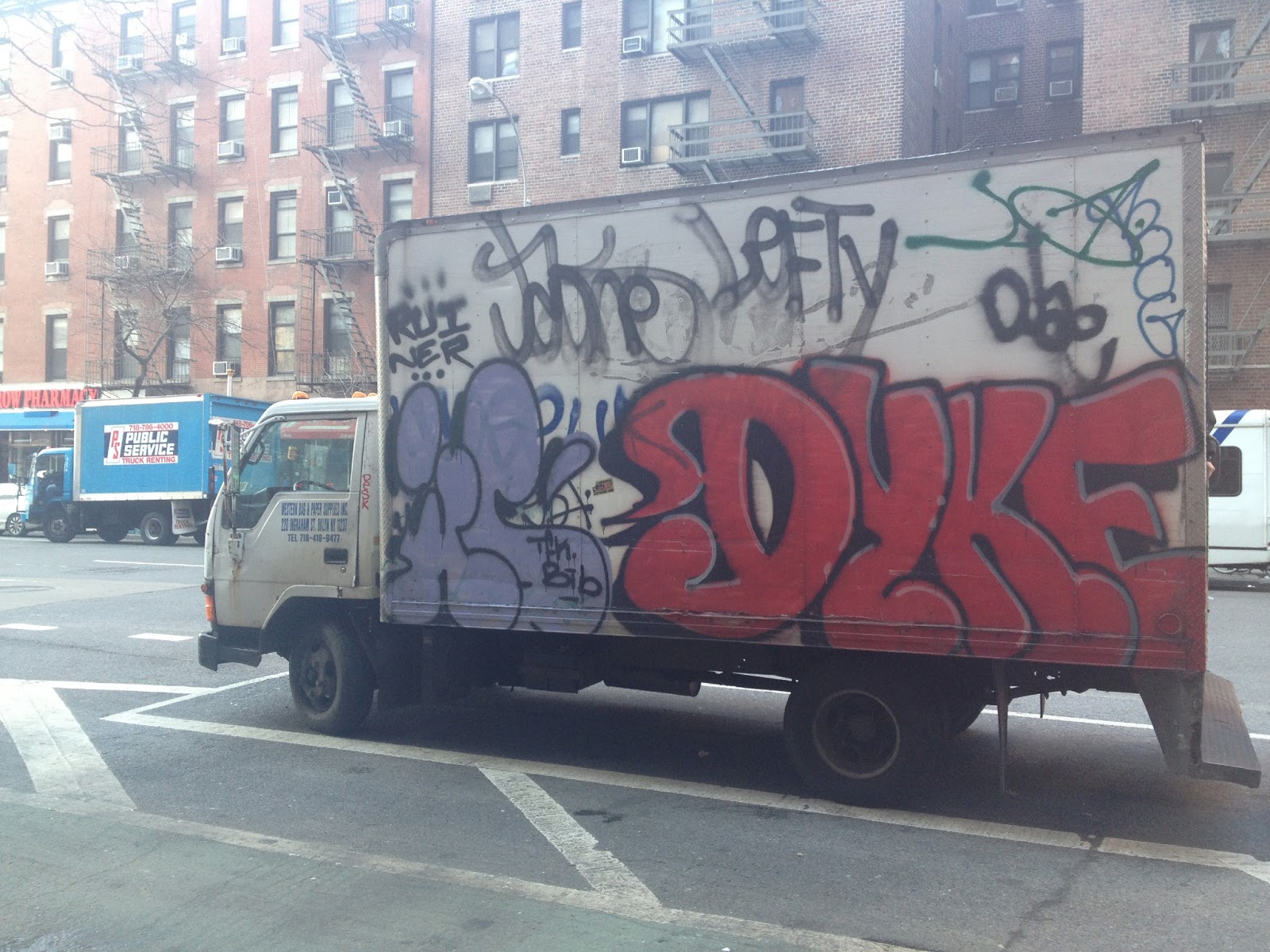
Ah, who am I kidding? I still care. I have to. It still brightens my day to see this sort of thing on the random street, as I did this afternoon on Amsterdam and 58th Street. And this is a blog about graffiti and street art, not the plagues guns. There will be plenty of time to get into that shit show. Must. Stay. Focused... 

I  saw this truck on 57th Street, near my office, waiting for a light, and although it drove off before I could get close enough to get a picture, I found it parked a few minutes later. Call it a small triumph for unpredictability.

So the thesis is done. Not DONE, of course, as that will happen at the end of spring, when I submit it to the dean of the Graduate School of Arts and Sciences, for official approval. But the first complete draft of "New York City Graffiti Murals: Signs of Hope, Marks of Distinction," as I've called it, is in the can, at a whopping 20 chapters, two appendices, 150 pages, 39,184 words and 65 images. It is..well, it's a lot. As I tweeted back on December 19th, the last day of the semester, "That's right bitches, I wrote a book."

After three or so years, I definitely felt triumphant as I watched three copies of the thesis spurt from the copier at Kinko's—one for my adviser, one for my second reader, and one for myself. But holy hell, was it a relief too. For starters, Word turned out to be a much worse program to embed images into than I ever imagined, and since I under-estimated how long it would take to curate all the images I wanted to use, that last week was excruciating.

How screwed up is this document? Well, when I open it at work, Word freaks out and starts adding pages, by the THOUSANDS. Every time I tried to open it, it would get caught in this loop of adding pages, and if I let it go, it would reach 10,000 before I force quit the program. Thank god it's just fine on my home laptop.

But it's all worth it. When my adviser weighed in on it on January 3, she had this to say:

"Congrats and bravo on producing a terrific thesis. It represents a tremendous outreach effort and really brings together an enormous number of case studies and important materials. It really turned out wonderfully"

WOO HOO!

So we're entering in the final lap now. I still haven't heard from my second reader yet, but one thing I do need to do is (surprise, surprise) introduce more theory into the text. A running theme for this entire project could easily be summed up simply as MORE THEORY.

For instance, there this is, from Halsey and Young:

The writer who repeatedly tags a wall that is consistently painted ‘clean’ by the authorities knows that there is a better than even chance that a roller brush will eventually be used to bring the wall up to pristine condition. The same writer knows that he has helped turn a porous surface into a non-porous canvas. The latter is one this body can connect with in a more visually affective way.

And then this, from Kramer:


The presence or absence of graffiti determines the social, cultural and economic composition of the city. If the city allows graffiti, then surely “urban decay” will surely follow. If the city does not allow graffiti, then a condition of “urban vitality” will follow. That is, when the city fights graffiti, businesses will come to the city and tourism will boom. This will, in turn, create jobs and increase the tax base. All the residents of the city will benefit from such arrangements.

Both of these are quotes that I cite in chapter five, which highlights the interdisciplinary aspects of my research. I know that in my case studies, these strains of thought come through in my descriptions of how the graffiti murals came to be. But years of toiling in a newspaper newsroom trained me to say as much as possible in as few words as possible, which in this case is the opposite of what is required for  I need to be more explicit and weave references to these folks directly into the text. Oh, and make my conclusion a good three or four pages longer.

So I've got my work cut out for me, especially since I really want to ultimately want to turn this into an online project, and maybe even get it published somewhere in print form. It'd be nice to see this in a form more becoming than 8.5x11 pages with binder clips, you know?

In the mean time, there will be visits to places like Five Points Bushwick:

Greenpoint:
 
And good old Gowanus:

Cheers!
PV